The Salinas Project

I was feeding my eight-week old twin daughters on Sunday and as I flipped through TV channels, I landed on “The Salinas Project” This was a pleasant surprise because I’m proud to say that I was born and raised in Salinas and it’s not everyday that I hear or see anything on television about Salinas out here in Michigan. The Salinas Project documentary nearly brought me to tears. I can relate to all of the young people that were interviewed in the film and words can’t describe what it’s like to see my old neighborhood on television (and in a positive light). My family and I moved out of Salinas when I was 15 years old and It’s hard to say what would’ve happened had we stayed. One thing is for certain, the streets of East Salinas helped make me the person I am today. I will always call Salinas my home.

I believe the documentary is being shown through PBS and WGVU. Check it out and learn a bit more about why I am the way I am.

The Salinas Project- Official Trailer from Carolyn Brown on Vimeo.

The Root of the Problem in Baltimore

The current riots and protests throughout Baltimore, Maryland were sparked by the death of Freddie Gray, a 25-year old that died days after suffering a spinal cord injury while in police custody. Protests in Baltimore took a destructive turn in recent days, as cars were set on fire, stores were looted and many were injured. Thousands of people have protested peacefully but the media has focused on violence, public destruction, and looting. The protests and riots are in response to decades of inequality and oppression but why isn’t the mass media focused on the root of the problem in Baltimore?

NPR published an article that looked to the past in order to to make sense of Freddie Gray’s death and the subsequent unrest in Baltimore. I found James Baldwin’s 1968 response to an interviewer’s question especially noteworthy given the current situation in American society:

QUESTION: How would you define somebody who smashes in the window of a television store and takes what he wants?

BALDWIN:  Before I get to that, how would you define somebody who puts a cat where he is and takes all the money out of the ghetto where he makes it? Who is looting whom? Grabbing off the TV set? He doesn’t really want the TV set. He’s saying screw you. It’s just judgment by the way, on the value of the TV set. He doesn’t want it. He wants to let you know he’s there. The question I’m trying to raise is a very serious question. The mass media-television and all the major news agencies-endlessly use that word “looter”. On television you always see black hands reaching in, you know. And so the American public concludes that these savages are trying to steal everything from us, And no one has seriously tried to get where the trouble is. After all, you’re accusing a captive population who has been robbed of everything of looting. I think it’s obscene.

James Baldwin’s words from 1968 still ring true in 2015. The people that were called “looters” back in the 60’s are now called “thugs”and just like in the 1960’s, the the media continues to avoid discussing the root of the problem.

Jon Stewart best summarized how the media’s poor representation of the oppressed continues to miss the underlying factors behind the protests and riots:

“…we can continue to ignore the roots of how systemically, historically disenfranchised many African American communities still are; only paying attention to them when we fear their periodic fiery ball of anger threatens to enter our air space, like some kind of Alex Haley comet; and once again breathing a blissful sigh of forgetful relief when it’s another near miss.”

Stewart’s commentary on CCN and most of the media’s reaction to the protests is spot on. He reminds us that the Baltimore protests and riots are a response to decades of inequality and oppression and thus the root of the problem. Riots take place when voices are continuously ignored.

Stewart also gives perhaps one of the most powerful facts associated with the protester’s anger and frustration when he says,

“Since 2011, the city of Baltimore has paid out close to 6 million dollars in court judgment or settlements to victims of police abuse.”

And as huge as that figure is, an article by the Baltimore Sun reveals an even more staggering number:

“Over the past four years, more than 100 people have won court judgments or settlements related to allegations of brutality and civil-rights violations.”

If you’re imagining that they were all men in their twenties, think again. The Baltimore Sun goes on to reveal the following:

Victims include a 15-year-old boy riding a dirt bike, a 26-year-old pregnant accountant who had witnessed a beating, a 50-year-old woman selling church raffle tickets, a 65-year-old church deacon rolling a cigarette and an 87-year-old grandmother aiding her wounded grandson. Those cases detail a frightful human toll. Officers have battered dozens of residents who suffered broken bones — jaws, noses, arms, legs, ankles — head trauma, organ failure, and even death, coming during questionable arrests. Some residents were beaten while handcuffed; others were thrown to the pavement.

The media and many people in the U.S. continue to miss the point and we refuse to dissect the real issues that people of color face. We need to acknowledge the roots of how systemically, historically disenfranchised many African American communities still are. Until the system makes strong and measurable progress towards helping ALL of the people in Baltimore, we shouldn’t be shocked when the African American community decides to rise, speak, and act in an attempt to be heard.

Perhaps a Langston Hughes poem called “Warning” best describes Baltimore’s current situation:

“Negroes-Sweet and docile. Meek, humble and kind. Beware the day They change their mind.”

Latino Retention in Higher Education: Moving Beyond Ideas and Implementing Change

We are on a perpetual quest for the elusive real Latino student and the most authentic Hispanic, the Latino who best captures what a successful Latino student is and should be. There are many opinions about the keys for Latino success in higher education and what the best practice truly is. It’s a convenient fantasy. If a true solution to Latino retention and higher graduation rates for students of color existed, we could create a handy checklist advising us how to be the best possible students, educators, and advisors.Then, perhaps, world peace would be possible. At the very least, we might avoid the inevitable friction that arises when we mistake Latino activists for what people do in the name of activism, kind of like religion.

“Sometimes, change requires an ultimatum. Sometimes, change demands difficult choices.”

Being a Latino is not a possession. It is not a credential. It is not the mantle on which to build one’s brand. There are liberal and conservative Latinos. There are religious or spiritual and atheistic or agnostic Latinos. Latinos inhabit the gender spectrum and are represented by all races and ethnicities. Breaking news! Latino students are individuals who ideally share the belief that their education rights are as inalienable as the rights of people from distinct backgrounds regardless of race, ethnicity, gender or sexual orientation. Various Latino solidarity movements through social media and hashtags reveal fractures in American inequalities. Those fractures run so damn deep it’s hard to believe they can be healed. In truth, I have struggled with the conversation while recognizing its importance and necessity. Latinos in higher education have been discussed in sweeping generalizations as if all Latinos are the same and all Latinos speak Spanish or have trouble getting into college.There are people of color active in higher education communities and I don’t want their voices to be erased. I’m not sure there’s a clear sense of what we mean when we call for solidarity. I don’t know how solidarity is possible when some people refuse to listen and others act like everything is just fine and others are so busy performing their understanding they neglect to offer anything of substance to the conversation. We have to shift from catharsis and reckoning to change. It’s time to build on the important work rising out of the hashtag. We have serious problems to deal with. We have a painful, infuriating history to reconcile — one where the concerns of heterosexual, able middle-class white men and women have too often been privileged at the expense of everyone else. But I’m not ready to turn my back on privileged people. I’m not even close. I am a fairly bad activist full of contradictions, but Latino education is as much a part of who I am as being a Mexican-American, a son of immigrants, and everything else that defines me. Intersectionality is an awkward word representing an important idea. While students of color should have equal representation in higher education and rights of students of color are as inalienable as the rights of anglos, no one assumes only one identity. We cannot consider the needs of Latino students without also accounting for race, ethnicity, gender, citizenship, class, sexuality, ability and more. Such nuanced awareness, such intersectionality, is the marrow within the bones of student success. Without it, Latino retention and graduation rates  will fracture even further.

“We have a painful, infuriating history to reconcile — one where the concerns of heterosexual, able middle-class white men and women have too often been privileged at the expense of everyone else. But I’m not ready to turn my back on privileged people.”

I have a few ideas about how we can do better in bringing more diverse voices into higher education, how we might at least try. Don’t pigeonhole students of color as capable of only speaking to a narrow set of issues. Students of color contain multitudes and they should have the same opportunities as white students to express those multitudes. The statement “I can’t find diverse contributors” is unacceptable. It is a willful act of dismissal to do nothing to change the status quo. We’re talking about whose voices are heard and whose voices are silenced. We’re talking about reach, visibility and influence. The shorthand for that is platforms, and platforms matter because they allow Latino students, faculty, and staff to reach beyond their personal and professional networks and participate in bigger conversations in front of broader audiences. Platforms allow Latinos to be seen and heard. A more diverse range of Latino professionals needs to be able to build platforms. Some of the change needed for this to happen is systemic, but editorial and/or executive diversity is also critical. There is no excuse for the appalling homogeny among decision-makers. When you diversify the gatekeepers, you diversify who is allowed past the gates. We have a responsibility to share the ladders we climb when reaching for success. Without those ladders, there’s nowhere to grow. Building a platform takes years, regardless of who you are. It takes some talent, some luck, and the right people finding your work in the right places at the right time. There is no denying how much easier it is for the more privileged among us to put in those years and catch the lucky breaks. We need to level the playing field. Latino communities must be more committed to formal mentorship that is intersectional in word and deed, actively supporting programs that make it possible for the voices that have so long been silenced to be heard in the right places at the right times. Organizations with the financial means must compensate Latino faculty and staff they solicit. All too often, Latinos are invited to share their perspective without compensation as if being given the opportunity to be heard is payment enough. Last I checked, working for free doesn’t keep the lights on. It makes no sense that this exploitative practice has occurred even once.

“Make small but significant gestures. The smallest ideas can create the greatest change.”

When editing or otherwise curating work, decision-makers can ask more of themselves and the administrators they work with. Is a given piece intersectional in ways that serve what the piece is trying to accomplish? If not, how can administrators guide faculty and staff toward work that is intellectually rigorous and reflective of the multiple contexts that influence our lives? All Latino students, faculty, and staff should demand more of themselves and their communities. We should educate ourselves on how to move from intersectional theory into practice. We should abandon the relentless affirmation of online culture in favor of substantive discourse. We should recognize that intellectual diversity is as important as other kinds of diversity. Make small but significant gestures. The smallest ideas can create the greatest change. What if men stopped contributing to publications that have an appalling lack of gender balance? What if white writers stopped contributing to publications that lacked diversity or intersectional awareness? What if Latinos declined to publish in magazines or serve on panels only privileging certain voices? Sometimes, change requires an ultimatum. Sometimes, change demands difficult choices. No one tactic will heal the fractures in Latino or retention and graduation rates in higher education. Creating long-lasting and necessary change requires a committed and sustained effort on many fronts. Until we put our ideas into practice, that change cannot begin. The post above was inspired on a piece written by NPR on August 23, 2013. The original article is predominantly about feminism but the meaning can be applied directly to Latino student retention. The Feminist and Latino movements have similarities and differences that I will explore in future posts. 

My Two Centavos on Black and Brown

We need to hear a human cry from the community, and we need it to be translated into English and Spanish. When a black person is murdered, we need to hear a human voice. The problem is one of black-brown unity: rather than allowing the majority group (Latinos) to dominate the minority (blacks), both must come to a place of cultural understanding. As a long term remedy, perhaps universities and colleges can develop ethnic studies programs in schools. Educating black and Latino students about their shared history, particularly during civil rights and labor movements, could help reduce inter-group violence and animosity. We need a vigorous multiculturalism, and I don’t mean food, fashion or a festival. We share responsibility. We must practice reciprocal solidarity.

Thoughts on Reverse Racism

When people discuss reverse racism or going through situations where they were mistreated because they were the minority – even if they are white and the majority is black, this is not considered racism, this is considered prejudice. People are constantly treated unfairly and with prejudice, but are not experiencing racism. Racism (see Black history in America) refers to not only individual instances but also societal and structural oppression. It’s important to make this distinction, especially when people bring up points about ‘reverse racism.’ Most arguments about reverse racism include instances of prejudice behavior and not actual racism.

Aamer Rahman is a comedian that describes and explains reverse racism perfectly. Check out the following video.

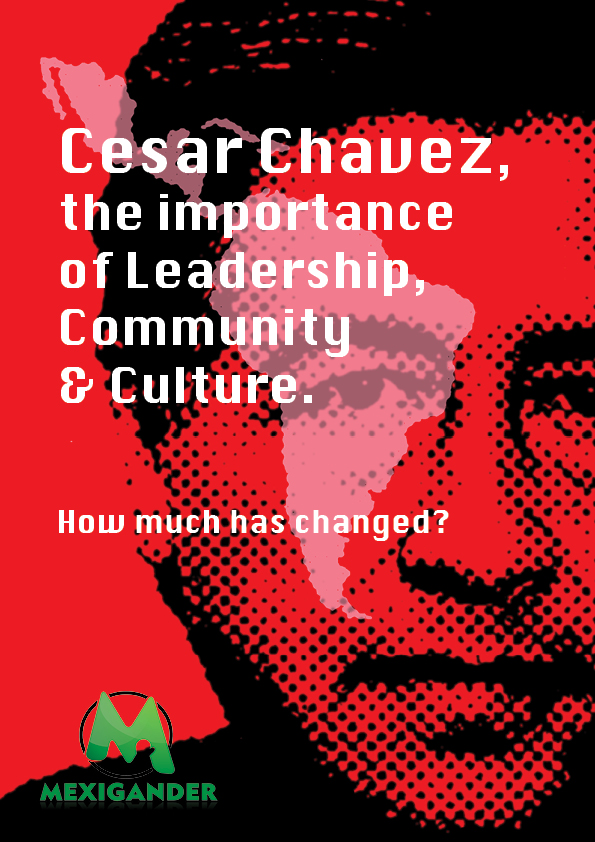
César E. Chávez: How Much Has Changed?

The following poem is one of my favorite ways to describe the many César E. Chávez celebrations I see throughout the year. There are many community leaders, politicians, and school administrators that use César’s name to further pat themselves on the back. These individuals use César’s name to give each other awards yet forget to mention or discuss his mission and the power of organizing people. They forget that César would want us to discuss real issues and organize one another in order to tackle the root of the problem that still exists today. We are quick to chant “Si se puede” but we are slow to create and implement plans that actually make our goals a reality. I read the poem below over a decade ago and I still think of it whenever I see César Chávez rallies, marches, and award ceremonies. So, after all these years and decades after Chávez’s death; how much has changed?

by Salvador Lopez

Turning In Your Grave – Tribute to Cesar Chavez

i am wearing a

Cesar Chavez t-shirt
driving a car with
Cesar Chavez stickers
on Cesar Chavez boulevard
passing by
Cesar Chavez school
on Cesar Chavez day
hearing
Cesar Chavez commercials
on the local radio
and seeing
Cesar Chavez billboards
announcing a
Cesar Chavez march
sponsored by multi-national
corporations
wondering
if
we praise you
or curse you
when farm-workers are still underpaid
under-appreciated
when immigrants
are scapegoated
when nothing you stood for
is respected

are you being praised
or institutionalized?

are you getting your due
or being silenced
into a catch phrase
porque
‘Si se puede’
‘olvidar la opresion’

‘Si se puede’
‘convertirte’
into an icon
and forget that
your ideas were never followed
and still aren’t today

so i assume you’d rather me not
wear a Cesar Chavez shirt
driving a car with Cesar Chavez stickers
on Cesar Chavez boulevard
as i pass by
Cesar Chavez school
on Cesar Chavez day
but rather
honor you with
justice fairwages
equality and not just
trophies
street names and
crumbs

perdonanos Cesar
i hope you’ll soon stop
turning in your grave

Written by Cesar A. Cruz

Let’s Eat Together.

I recently attended an event called Community Reading Project Contextual Conversation. The event was organized at Grand Valley State University and it focused on the topic of immigration and how West Michigan can be a more welcoming community. There was a short presentation, two short videos, and a panel discussion. The panel discussion featured Susan Im, Kemal Hamulic, and Grand Rapids Mayor George Hartwell. All three panelists did a great job of answering questions about immigration, perception, and reality. Mayor Hartwell offered very positive point of views about how immigration affects our communities and Kemal and Susan focused on how communities can be more welcoming to immigrants. I would like to share the following three  points that stood out to me from the panelists:

  • When asked a question about what to say or how to respond to an individual that has a very negative view on immigrants, Kamel Hamulic advised the following: “Ask them why. Then ask them why again.” Kemal continued to explain that continuing to ask the “why?” question will uncover the fact that these individuals are basing their beliefs not on fact but rather on emotion.
  • Susan Im also had a very good outlook on how to have a conversation with people that are against immigration. She stated: “Challenge people’s perception of what an undocumented person looks like.” Susan went on to talk about her sit down conversations with a Deferred Action student that had a great story about how they were brought to the United States when they were very young. They did not make the decision to come to the United States and have been studying and working in the United States as Americans. Susan continued her point by stating, “challenging the perception of what an immigrant looks like becomes extremely important.”
  • When asked how to be a more welcoming community, Kemal Hamulic came up with perhaps the most simple, yet powerful response: “Food. Invite them over to eat food. They will not return the favor. They will retaliate and invite you to eat as much food as you can handle.”

How can you make your community more welcoming? Invite them to your home for lunch or dinner. Let’s put down our phones and quit texting for a while. Let’s talk to someone from a different culture or background and attempt to get to know them by sitting down for a meal. Some things don’t have to be complicated. Let’s indulge, grow, eat.

Admirable and Worthy Response to Racism

Brent Campbell, a senior at UNC Wilmington, was verbally assaulted with threats and racial epithets by a group of whites in a pickup truck  while working out at the University’s track and field. Campbell wrote a letter to the school’s chancellor, Gary Williams, after the verbal assault. In the letter, he explained the incident:

“While training on the Intramural fields at around 3 p.m. in front of New Hanover gym a blue pickup truck with 5 white male students drove past me. As they slowed down for the speed bumps they began to yell threats and abuse: “Go home, you f—ing Nigger!” “If we see you here again we’ll beat your f—ing nigger ass!” “What are you doing here, you f—ing coon?” They shouted threats and abuse as they drove past. I kept my composure and simply continued on with my workout. 5 minutes later the men came back, less 3 members. The driver and his passenger shouted more abuse for a while and ended with this statement: “My name is (removed) and if we see you here again we’ll stomp your Nigger ass!”

I was moved to write this blog post because of Campbell’s letter to the school’s chancellor. I thought his suggestion of the action that should be taken against the perpetrators was admirable and worthy of being highlighted:

 I was told that if the owner of the vehicle, this (removed), could be found he would be expelled. I write this letter for him too. (removed) and his friends aren’t the problem here. I can’t be angry at them. They are a product of their environment. Somewhere in their homes, in their schools, in their churches even, they were taught this. They were taught to hate. Expulsion would be the easy fix but it wouldn’t be the solution. The problem is that they have never been in community with black people before. He has only ever seen me, he has never known me. If he knew me, truly knew me, he would have never done those things. I know he wouldn’t. If he were found I would ask that his punishment be to get to know me. He should be forced to meet with me once a week for a month over lunch or dinner. That isn’t an empty suggestion to sound caring or altruistic. I mean that. I mean it down to my core. The reality is that knowledge and love have the power to change a heart more readily than discipline or punishment. If he could see my eagerness to forgive him, if he could come to know my struggles here at this school, if he could get a glimpse of the person that I am….he would find, in all of that, the solution. That is how you change a heart. That is how we could grow to become a unified campus. That is how UNCW could come to achieve authentic racial reconciliation.

For Campbell’s complete letter, click here.

Mexigander’s Two Cents on Immigration

A legal immigration reform has gained much attention in the United States within the past five years and it is often the topic of all the national television channels and radio broadcasts. I often listen to newscasts on NPR, and CNN and can’t help but have my own opinion on the matter. I am the product of a Mexican mother that was granted her United States legal residence thanks in part to the immigration reform during President Regan’s leadership back in the 1980’s. It is difficult for me not to support a new immigration reform that is much needed in our country today. With that being said, I would like to take a moment to explore the immigration topic by discussing some of the questions and answers I heard on NPR a few months ago. These questions are often asked about immigrants in the United States and I happen to agree with each response. I am by no means an expert on this topic; in fact, I’m far from it. With that being said, I would like to put my two cents in writing, simply, because I can.

Much of the debate about immigration boils down to a simple economic question: Do immigrants hurt or help those of us who are already here?

Many economists including Adam Davidson, Economist from Planet Money, agree that the answer is pretty simple. For the average American, immigration helps. It doesn’t help the average American by much but by many estimates, they help make Americans about one percent richer. The idea is that immigrants generally perform roles in our society that we – need to be performed – and very few Americans want to do those roles, and immigrants simply do them more cheaply. So the average American’s dollars go a little bit farther.

Yes, this has been a general argument for quite some time but you may also be asking: But doesn’t that hurt people who are already here who would do those jobs?

“Yes, the one group that may arguably be hurt by immigration, particularly undocumented immigrants, is the group of high school dropouts.”

And that’s not a small group of people. There are 30 to 40 million of them in the population and, by some estimates; they may be seven percent poorer thanks to immigrants.

Let’s look at the big picture

Although it’s important to see the pros and cons of the immigration argument, let’s remember, immigrants – documented or undocumented – don’t just come here and work. They also spend their money. They go to restaurants. They get haircuts. They buy cell phones. They rent houses. They buy houses. And as a result, they’re not just takers of jobs. They’re also creators of jobs. There’s also fair bit evidence that immigrants, particularly undocumented low-skilled immigrants, don’t replace American jobs. They complement American jobs.

Latino Spending Power Outlined in Hispanic Business Article

Founded in 1999 by a group of Latino producers, educators and media activists, NALIP is a national organization of industry, independent and community media makers – directors and producers, writers, performers and advocates — dedicated to increasing the quality and quantity of images by, for and about Latinos in the media.

Hispanic Business recently released the article: “NALIP 2013: Spotlight on the Trillion $ Latino market; The National Association of Latino Independent Producers Examines The Global Shift of Latino Purchasing and Content Creating Power” by Yellow Brix. The article brought very interesting facts about the growing Latino market and its spending power, particularly in the entertainment business. Below, you’ll find some of the statistics that we found to be particularly interesting:

  • The size of the U.S. Hispanic population worldwide ranked second only to Mexico with 50.5 million to 112 million respectively.
  • Hispanics’ spending patterns help to determine the success or failure of many youth-oriented products and services; 65% of U.S. Hispanics are Millennials, ages 22 to 35.
  • Latinos watch more television, buy more movie tickets and consume more media than any other ethnicity, yet Latinos comprise less than 1% of executives in Hollywood.
  • Latinos are estimated to expend over $1 billion on U.S. filmed entertainment, and $1 trillion in general market-buying power.

For more information on this article, please see NALIP 2013: Spotlight on the Trillion $ Latino Market ; The National Association of Latino Independent Producers Examines The Global Shift of Latino Purchasing and Content Creating Power

Salvador Lopez Awarded Young Entrepreneur of the Year

On Monday, March 25, I received the award and honor of Young Entrepreneur of the Year at the West Michigan Hispanic Chamber of Commerce’s Annual Awards Banquet  for my efforts working with El Centro Translations, a part of the Hispanic Center of Western Michigan. It was an incredible honor to be recognized by my peers, the Hispanic Chamber, and Latino professionals that have supported me over the years.

The past three years have been part of a great journey that has led me to be involved with great organizations such as the West Michigan Hispanic Chamber of  Commerce. It is both encouraging and rewarding to be a member of an organization that supports the growth of Latino professionals and businesses.

The West Michigan Hispanic Chamber of Commerce was founded in 2006 and has been dedicated to increasing the economic advancement Latino owned businesses and to assist in their professional growth. The Annual Awards Banquet is the organization’s big annual event and typically attracts several hundred attendees. This year the banquet sold out all its 450 available seats at the Pinnacle Center in Hudsonville, Michigan.

I would like to thank the Chamber’s Executive Director, Veronica Ramirez-Garcia for putting together such a great event. Veronica’s a friend and professional contact that has recently been brought in by the Chamber and she has already made her presence felt by reaching out to young professionals and nonprofit organizations that will continue to make an impact within the Hispanic community.

¿Tú, qué eres?

I live at the intersection of my two cultures, I take from each what I choose. A few years ago, I wrote a poem about identity and my struggle to balance two cultures. My roots are those that come from a Mexican household but I also have all the experiences of any other American growing up in the states. I am proud of the poem below because it helps put my thoughts into words while giving me an opportunity to explore the topic of identity;  a topic that lies at  the very core of Mexigander.

¿Tú, qué eres?

El primer grito del niño café nacido en tierras americanas, es desconocido para los americanos de piel clara.
Su dialecto es distinto al de los demás.
Come las especies de su madre,
distintas para aquellos otros chicos a su alrededor.
El televisor muestra la patria de su casa,
gritando con su padre,
dándole ánimos a su equipo Tri color.
Nacido en un país desconocido,
Habla, camina, y siente coraje como un mexicano.
Le hierve la sangre de dolores y maltratos a sus antepasados, mientras disfraza su exterior con pláticas de estudio americano impuestas sobre su verdadera persona.
La respuesta, aunque extraña a los demás,
es fácil.

By Salvador Lopez

Black or Latino

Mexigander seeks to explore identity and the way we view ourselves and others. Are we viewed as Hispanics? Latinos? Mexicans? Americans? Latinos that are Puerto Rican, Dominican or from parts of Latin America or the Caribbean often have to explain their race or ethnicity. The video above does a great job of explaining the topic about the Latino /Black identity and how the mainstream media portrays black Latinos.

What Motivates You to Succeed?

I was recently asked a series of questions as I applied to the Tedxgr event. These questions prompted me to not only respond but to also think about the answer on a deeper level. I have never been to a Tedxgr event but I am looking forward to being a part of the event this year. The following is a part of the Tedxgr application and I encourage others to apply.

“Being a part of a Mexican family and having been raised in a Spanish-speaking household has shaped me into who I am today.”

Tell us a few details about yourself: Ex. What magazines, books or blogs are you reading? What is your favorite station on Pandora or Spotify? What is your favorite app? What drives you to get up everyday? What motivates you?

I like to read books from Latino authors such as Gabriel Garcia Marquez and Juan Rulfo but I also like novels by Chuck Palahniuk and other contemporary works. My favorite station on Pandora (currently) is Kings of Leon but whenever I get bored of the same stations, I always go back to listening to the Beatles. My favorite app right now is probably Flixster because I’m able to see movie ratings before driving to the movie theatre or before renting a movie. This app has saved me from making the mistake of sitting through a movie that sounded like a good idea only to find out that it was a rotten tomato.

What motivates me? My family. Being a part of a Mexican family and having been raised in a Spanish-speaking household has shaped me into who I am today. My parents’ hard work, their motivation to raise their children, and their everlasting hope in each of their kids is what fuels and motivates me to succeed.

What motivates you to succeed?

By Salvador Lopez

Welcome to Mexigander

“Mexigander seeks to inform and educate about the importance of cultural diversity and identity from the point of view of an individual that was Mexican raised and Michigan made.”

At the age of fifteen, I was often asked where I was from. I responded by saying; “I’m from California.” When I was 21 years old I changed the way I responded by saying: “I’m from Grand Rapids.” At the age of 25, I responded by saying; “I am from Mexico”

I am from California, Michigan, Grand Rapids, and Mexico. While in search of one’s identity, it is important to acknowledge the places that help us become who we are. I grew up in a Mexican household. I lived in Mexico every summer  during my teenage years. I have lived in Grand Rapids for over 13 years. I think it’s safe to say that any response that includes these locations would be accurate.

Where are you from?

By Salvador Lopez