
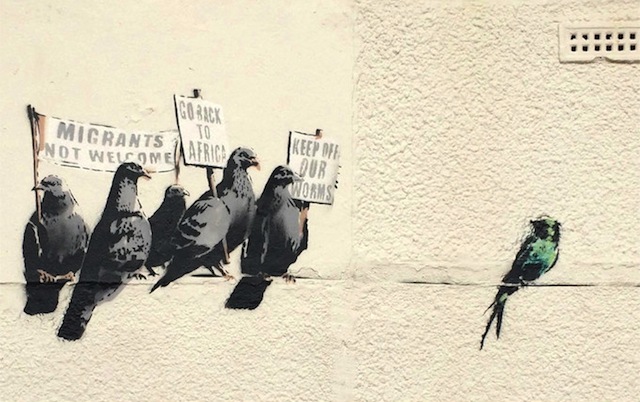
I don’t particularly care for New Year resolution plans but one of my goals in 2017 is to become more knowledgeable about Critical Race Theory (CRT). I have read articles but I’ve never truly explored the legal components of CRT and the impact of law in race discussions. This is the beginning of a CRT blog series where I’ll share CRT findings and how the theory is applicable in my community in Michigan. President Trump has declared that he plans enforce the United States laws and I figure now is as good a time as any to educate myself on law, race, and social justice in America.
I’m currently reading Critical Race Theory: The Key Writings that Formed the Movement edited by Kimberle Crenshaw, Neil T. Gotanda, Gary Peller, and Kendall Thomas. The book offers a compilation of scholarly articles that presented new paradigms for understanding racial injustice and seeing the links between race, gender, sexual orientation, and class. Mexigander was founded on the idea that we all have multiple identities that are intertwined and Critical Race Theory scholars like Kimberle Crenshaw set the foundation and historical context that has helped me think critically about how I can contribute solutions to race issues that have been prominent in America for hundreds of years.
Critical Race Theory (CRT) research is a compilation of the growing body of legal scholarship related to the importance of race in law. Critical Race Theory: The Key Writings that Formed the Movement (1995), briefly explains CRT in the following two points:
- CRT first seeks to understand how a regime of white supremacy and its subordination of people of color have been created and maintained in America, and in particular, to examine the relationship between that social structure and professional ideals such as the “rule of law” and “equal protection.”
- CRT research and writings desires to not merely understand the vexed bond between law and racial power but to change
This blog series will continue to explore CRT articles by starting with the civil rights movement and how some of the struggles that existed during the 60’s and 70’s are still very prevalent in 2017.
 Modos
Modos 